Introduction
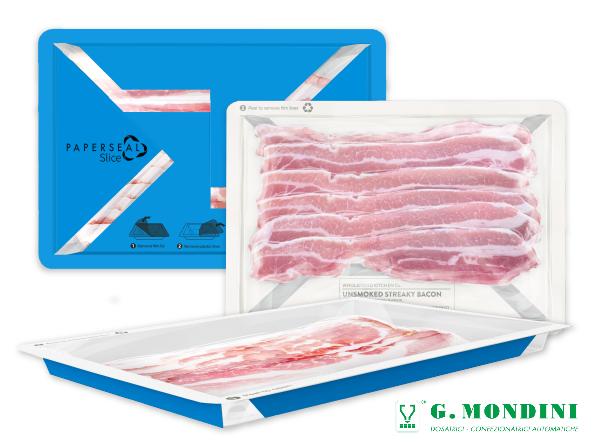
PaperSeal® is a cardboard tray for skin, MAP and top-seal packing, used as an alternative to plastic MAP and skin trays. In this post we explain what it is made of, how it runs on your line and when it makes sense for your product.
What is PaperSeal®?
PaperSeal® is a tray made from pre-cut cardboard and a protective barrier film. The film is easy to remove, after which the cardboard goes into the paper stream. The tray uses up to 80% less plastic than a comparable plastic tray.
The sealing flange is one continuous piece, which gives a seal as secure as on a traditional plastic tray. The top layer can be Top Seal, MAP or skin, and the trays run on standard tray sealers with the right tooling.
The trays are stackable, which saves space in transport. The entire surface can be printed, inside and outside, so your brand is visible on every side of the pack.
When does PaperSeal® make sense?
PaperSeal® suits processors who want less plastic in their MAP or skin packs and a printed cardboard surface on the shelf. Once sealed, it gives the same shelf life as a traditional plastic tray for MAP and skin. It is used for cheese, fresh meat, cold cuts and ready meals.
The cardboard is recyclable in the paper stream once the film is separated (recycling code C/PAP 81), where local sorting rules allow.
Production process of PaperSeal®
Real examples of the PaperSeal®
In short
PaperSeal® combines pre-cut cardboard with a separable barrier film for skin, MAP and Top Seal. It uses up to 80% less plastic than a comparable plastic tray and can be printed on every surface. See the formats on our product page or contact us directly.